


Algemeen Nederlands Tijdschrift voor Wijsbegeerte - Volume 117, Issue 2, 2025
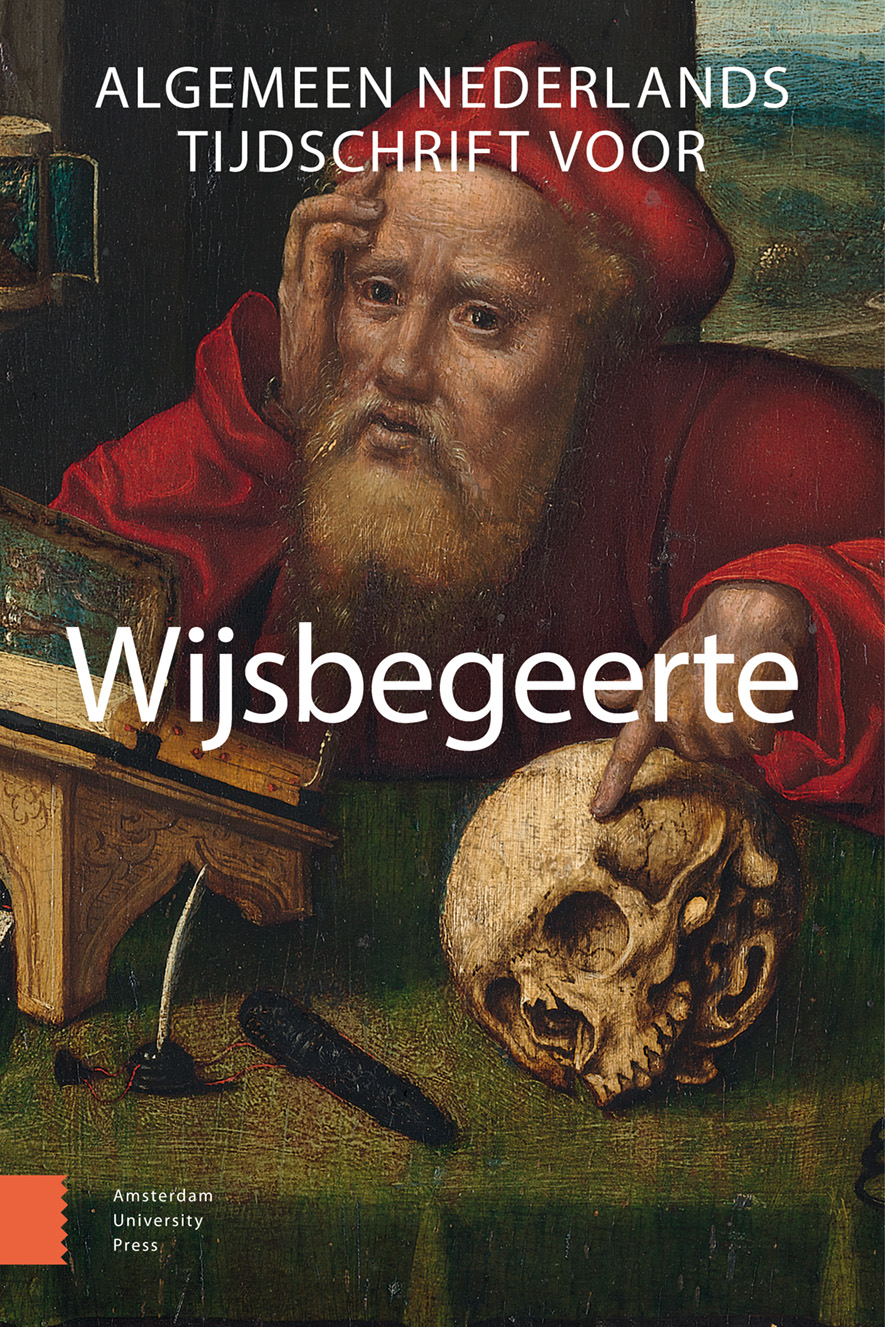
Volume 117, Issue 2, 2025
-
-
Ouder worden met Rousseau
show More to view fulltext, buy and share links for:Ouder worden met Rousseau show Less to hide fulltext, buy and share links for: Ouder worden met RousseauAuthor: Ruud WeltenAbstractAgeing with Rousseau
This contribution considers ageing from the thought of Jean-Jacques Rousseau, and it chooses as its starting point Émile ou de l’éducation and appeals to Rousseau’s last text Les rêveries du promeneur solitaire. For Rousseau, ageing is not an afterthought in human life, but the starting point par excellence for understanding the human subject. Rousseau’s strict division between nature and culture, with the latter always seen as corrupting the former, gives reason to consider ageing and old age. Often, we see only negative aspects of ageing and regard death as a tragic detriment to a human life, destined only to grow and flourish. In Rousseau’s thinking, old age and deterioration are perfectly natural and prepare us for death. That, then, is the task of philosophy: to learn to die. Old age is faithful to what nature gives us and therefore, it is good. However, we as cultural beings have the greatest difficulty in recognizing this.
-
-
-
Zeeën van tijd
show More to view fulltext, buy and share links for:Zeeën van tijd show Less to hide fulltext, buy and share links for: Zeeën van tijdAuthor: Arthur MeijerAbstractSeas of Time: Dementia as an Experience of Nihilism
Common concepts of our experience of time are unsuited for use in cases of dementia. While they form the foundation of many theories of meaning and experience, they leave us in the dark when this meaning seems lost. In this essay, an alternative to our phenomenological theories of time is set out in order to explore the experience of dementia. Using nihilistic theories of solitude and Nothingness, I argue that dementia can be seen as a similar experience: within the human but outside our usual conceptions thereof. Through this reinterpretation of dementia, this essay seeks to make it more human, less threatening and a possible gateway towards a broader understanding of what it means to be human.
-
-
-
Leven in een tijd zonder verwachtingen
show More to view fulltext, buy and share links for:Leven in een tijd zonder verwachtingen show Less to hide fulltext, buy and share links for: Leven in een tijd zonder verwachtingenAuthor: Joep DohmenAbstractThe good life here and now
This paper explores the nature and significance of the temporal character of human existence. I propose a contemporary ethics of time, driven by a sense of discontent about ‘the dominance of the present.’ This dominance conceals various forms of alienation. The paper consists of three parts. In the first part, I discuss four perspectives on time: natural time, clock time, inner-worldly time, and personal time. The second part serves as an intermezzo, illustrating the different ways in which Western history has dealt with fleeting existence. Here, I distinguish between cyclical time, linear time, humanized time, and the contemporary biographical choice. Finally, drawing on Heidegger’s concept of Sein zum Tode and Foucault’s notion of self-care, I propose a way to engage with time that takes both care and responsibility into account on a personal level.
-
-
-
Betekenisvol ouder worden
show More to view fulltext, buy and share links for:Betekenisvol ouder worden show Less to hide fulltext, buy and share links for: Betekenisvol ouder wordenAuthor: Laurine BlonkAbstractMeaningful ageing. On the grey area between ageing and life in society.
In the light of increasing appeals to consider meaningful ageing as a societal rather than a personal issue, both in public discourse and in academia, this paper discusses how De Beauvoir recasts life in society through the prism of ageing. I argue that De Beauvoir herewith provides an important corrective to tendencies to ‘under-socialize’ or ‘over-socialize’ meaning in later life. These tendencies can be traced back to the traditional conceptualization of old age as decline but also play out in recent critical phenomenologies of ageing. Through a critical discussion of the problems hereof, I elucidate how we can address these problems by articulating with De Beauvoir the grey area between ageing and life in society. By juxtaposing De Beauvoir with Arendt, I flesh out the implications for the politics of meaningful ageing.
-
-
-
Wat wil je bewaren? Een gesprek over vergankelijkheid, kunst en materialiteit
show More to view fulltext, buy and share links for:Wat wil je bewaren? Een gesprek over vergankelijkheid, kunst en materialiteit show Less to hide fulltext, buy and share links for: Wat wil je bewaren? Een gesprek over vergankelijkheid, kunst en materialiteitAuthor: Hans-Georg Eilenberger
-
Most Read This Month

Most Cited Most Cited RSS feed
-
-
Philosophy and Wisdom
Author: Peter Jonkers
-
-
-
A praise of pain
Author: Giulia Sissa
-
- More Less