


Algemeen Nederlands Tijdschrift voor Wijsbegeerte - Volume 105, Nummer 3, 2013
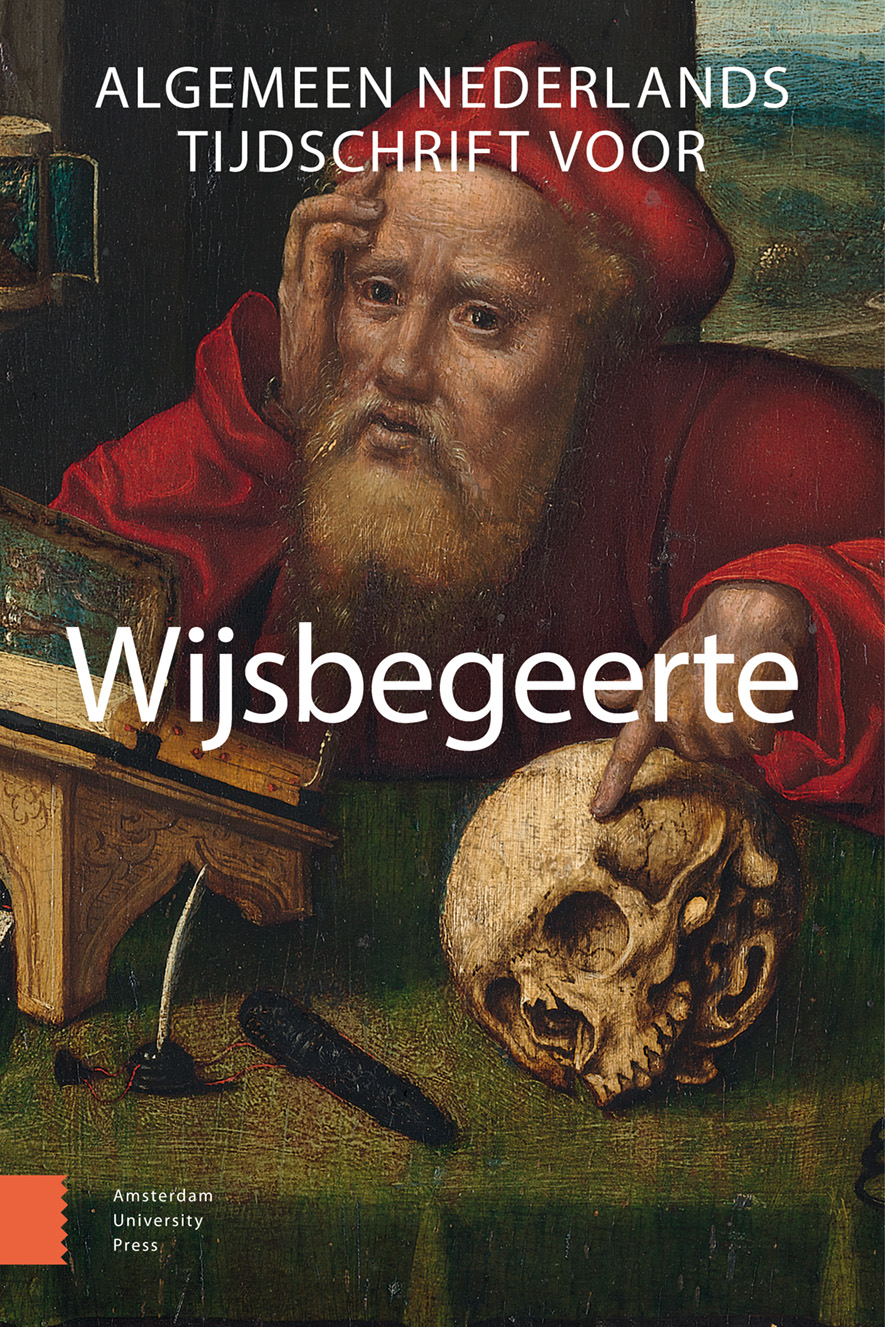
Volume 105, Nummer 3, 2013
-
-
De toekomst van kunst
MeerDe toekomst van kunst Minder De toekomst van kunstAuteur: Rob van GerwenA philosophical analysis of the future of art must explicate art’s nature, as well as discuss the historical nature of art practice. Only so can one explain those contemporary developments in art which have led many people to doubt whether art even has a future. Arguably, art practice as we know it started with the installing of the modern system of the fine arts. I explain the pragmatics of art so understood, and suggest that we can define art, internally. We need not resort to a nominalist approach that claims that something is a work of art if some representative of the art world says it is. Instead of such empty proceduralism, I explain how all art’s focal objects, persons and activities are mutually adjusted and can only be understood in light of the whole. Within that whole of art practice, the contemporary samples of art’s alleged failure can be assessed. Now the modern system treats the arts as aesthetic, and prescribes that to judge a work one has to experience it for oneself. Why this should be so, I explain in terms of the perceivability of the artist in the work. Next, art develops as a whole rather than in a piecemeal manner. Particular contemporary works may alienate the audience from art practice, yet once they are recognisably in a procedure which has clear artistic potency they can be incorporated fruitfully in the modern system as explained. In all, the future of art is the future of the modern system, unless the system as a whole goes. We see this happen with the Taliban, but do not ourselves seem to be vulnerable to such onslaught. Yet, our culture may be in the process of eliminating the human mind from the objective reality, and if nothing stops us, art too will come to an end. Luckily, by then we will not be such as to lament that demise.
-
-
-
De kunst herrijst als de vogel Phoenix uit haar as
MeerDe kunst herrijst als de vogel Phoenix uit haar as Minder De kunst herrijst als de vogel Phoenix uit haar asAuteur: Petran KockelkorenAccording to common sense cultural history is propelled by grand ideas. Contrary to this view a material history will be defended. Artists have always taken the lead in the exploration of new technologies that mediate human perception. The modern worldview has been instigated by the artistic domestication of the camera obscura and its successors: the photocamera and tv. These technologies produced the spectator who was enthroned by Descartes as the modern autonomous subject. Contemporary digital technologies call for the overthrow of the obsolete paradigm of autonomy. Art paves the way for new subject-productions.
-
-
-
Terug naar de basis… en bovenbouw!
MeerTerug naar de basis… en bovenbouw! Minder Terug naar de basis… en bovenbouw!Auteur: Thijs LijsterThe metaphor of base and superstructure has been one of the most controversial elements in Marxist aesthetics. In this text I discuss some of the many questions it raises. Today, many theorists believe that its problems are so extensive that it has lost all plausibility. I believe, however, that in rejecting the Marxist framework, aesthetics and cultural theory risks throwing out the baby with the bath water and jeopardizes its critical potential. Drawing on the work of Fredric Jameson and Slavoj Žižek, I will propose a heuristic reinterpretation of the metaphor of base and superstructure.
-
-
-
De kunst is dood, leve de kunsten! - Over de enkelvoudigheid en meervoudigheid van kunst
MeerDe kunst is dood, leve de kunsten! - Over de enkelvoudigheid en meervoudigheid van kunst Minder De kunst is dood, leve de kunsten! - Over de enkelvoudigheid en meervoudigheid van kunstAuteur: Aukje van RoodenAlthough many have identified similarities between the arts, the question as to what principle they would share has proved difficult to answer. This article unfolds three crucial moments in the search for an answer to the question of the singularity and plurality of art: Batteux’s attempt to reduce the arts to one principle in The Fine Arts Reduced to a Single Principle (1746), the early idealist-romantic attempt to synthesize the arts in The Earliest System-Program of German Idealism (1798), and Nancy’s recent attempt, in The Muses (2006), to understand the Hegelian End of Art as a beginning of the arts in plural.
-
-
-
Een toekomst voor esthetica in de kunstfilosofie?
MeerEen toekomst voor esthetica in de kunstfilosofie? Minder Een toekomst voor esthetica in de kunstfilosofie?Auteur: Johan VeldemanHas art still something to do with aesthetics? Traditional aesthetic theories were abandoned under influence of the arguments of Morris Weitz. It seems that there is no longer a place for aesthetics in the philosophy of art. Furthermore, a lot of contemporary art seems to be radically anti-aesthetic. It is argued that there is nonetheless a central role to be played for aesthetic experience in art.
-
-
-
Freddy Mortier (2011). De hoer van de duivel. Illusies en godsgeloof. Leuven/Den Haag: Acco, 403 pp., 32 €
MeerFreddy Mortier (2011). De hoer van de duivel. Illusies en godsgeloof. Leuven/Den Haag: Acco, 403 pp., 32 € Minder Freddy Mortier (2011). De hoer van de duivel. Illusies en godsgeloof. Leuven/Den Haag: Acco, 403 pp., 32 €Auteur: Rik Peels
-
-
-
Marin Terpstra (redactie) (2012). Onenigheid en Gemeenschap. Basisboek Politieke Filosofie. Amsterdam: Uitgeverij Boom, 575 pp., 39,50 €
MeerMarin Terpstra (redactie) (2012). Onenigheid en Gemeenschap. Basisboek Politieke Filosofie. Amsterdam: Uitgeverij Boom, 575 pp., 39,50 € Minder Marin Terpstra (redactie) (2012). Onenigheid en Gemeenschap. Basisboek Politieke Filosofie. Amsterdam: Uitgeverij Boom, 575 pp., 39,50 €Auteur: Pieter Pekelharing
-
-
-
Gregory de Vleeschouwer (2011). Getekend door het lichaam: De rol van het lichaam bij de totstandkoming van persoonsidentiteit. KVAB: Brussel, 267 pp.
MeerGregory de Vleeschouwer (2011). Getekend door het lichaam: De rol van het lichaam bij de totstandkoming van persoonsidentiteit. KVAB: Brussel, 267 pp. Minder Gregory de Vleeschouwer (2011). Getekend door het lichaam: De rol van het lichaam bij de totstandkoming van persoonsidentiteit. KVAB: Brussel, 267 pp.Auteur: Fleur Jongepier
-
Meest gelezen

Meest geciteerd Most Cited RSS feed
-
-
Philosophy and Wisdom
Auteur: Peter Jonkers
-
-
-
A praise of pain
Auteur: Giulia Sissa
-
- More Less