


Tijdschrift voor Geschiedenis - Volume 138, Issue 2, 2025
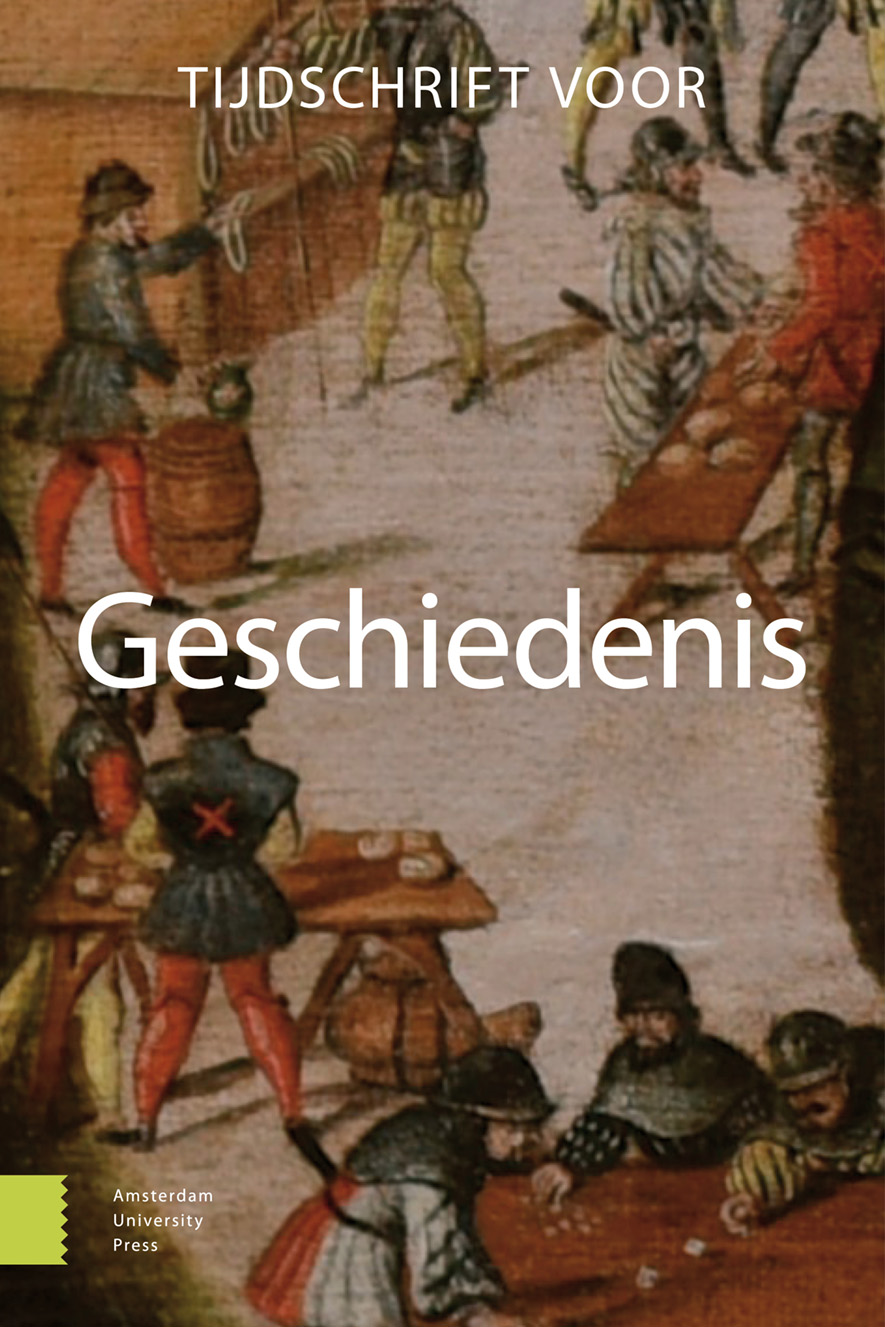
Volume 138, Issue 2, 2025
- Uit de redactie
-
- Artikel
-
-
-
‘Foute’ vrouwen in het gareel dwingen
show More to view fulltext, buy and share links for:‘Foute’ vrouwen in het gareel dwingen show Less to hide fulltext, buy and share links for: ‘Foute’ vrouwen in het gareel dwingenAuthor: Lieke SpeerstraAbstractFrom ‘fallen women’ to ‘good housewives’: The resocialization of female collaborators in post-occupation Netherlands, 1946-1951
The extensive re-education programs that followed the internment of Dutch collaborators have received scant historical attention. Over a period of five years after their arrest, around 90,000 so-called political delinquents became eligible for conditional release. Instead of being tried, they were released under the condition that they would be subjected to intrusive resocialization programs by the Dutch state. The re-education of women was influenced by an issue considered less relevant for men: these women had to be trusted with raising the next generation of Dutch citizens. Based on archival material from the institution responsible for resocialization, Stichting Toezicht Politieke Delinquenten, this article describes this interference in the private lives of female collaborators after their release. It shows how they were expected to behave in order to be accepted back into Dutch society, and challenges the persisting myth that women were principally sexual collaborators.
-
-
-
-
‘Zij die niet geloven, praten niet’
show More to view fulltext, buy and share links for:‘Zij die niet geloven, praten niet’ show Less to hide fulltext, buy and share links for: ‘Zij die niet geloven, praten niet’Author: Hilde ReidingAbstractDisbelievers must stay silent
Historians have long failed adequately to consider the wide range of recurring criticism accompanying European integration, and have only belatedly recognized its diversity and relevance. It is not widely known, for instance, that there was significant opposition to the first European elections, held in 1979, in various member states. In the Netherlands all left-wing political parties had factions which questioned the direction of the European Community and the principle of direct election to the European Parliament. This type of dissent was also present within the PvdA (Labour Party). This article analyzes the struggles surrounding the election program and the composition of the candidate list, and explains why critics of the European Community were eventually defeated. Comparison with debates in the United Kingdom and Denmark may explain why critical PvdA members in the Netherlands were less successful than their counterparts in other countries.
-
-
-
Het politieke wordt persoonlijk
show More to view fulltext, buy and share links for:Het politieke wordt persoonlijk show Less to hide fulltext, buy and share links for: Het politieke wordt persoonlijkAuthor: Elisa HendriksAbstractThe political becomes personal. Gender representations of cabinet members in Dutch newspapers and weeklies, 1973-1982
‘The office of cabinet minister is not for women’, wrote Volkskrant journalist Martin de Ruyter in 1974. This article examines interviews with female and male politicians from the cabinets Den Uyl (1973-1977), Van Agt I (1977-1981), and Van Agt II (1981-1982). First, it describes how cabinet members used self-fashioning to forge their public personas. Second, it shows what journalists tried to accomplish with these interviews. Finally, it explores the effect of this divergence between the goals of politicians and of journalists. Despite more open communication by politicians, more women in politics, and against the background of the second wave of feminism, the result was gender-stereotyping and sexist descriptions of female cabinet members by journalists both left- and right-wing, male and female.
-
- Reviewartikel
-
-
-
Disability History
show More to view fulltext, buy and share links for:Disability History show Less to hide fulltext, buy and share links for: Disability HistoryAuthors: Floris Plak, Eline Pollaert & Paul van TrigtAbstractDisability History: a review essay
In this essay the authors discuss the main trends in disability history in the last five years, and review a selection of relevant publications. After a short introduction to the field and to the Dutch context, they show first how disability historians have conceptualised disability as a social construct. Second, they argue that recent disability histories from below have been enriched by intersectional and transnational approaches. Historians increasingly study the intersection of disability with, for instance, race, and look beyond national borders. Moreover, disability historians increasingly question and historicize Anglo-American models of disability. The authors consider these trends as positive contributions to the field. They conclude by arguing that disability history could be further enriched by intersections with other disciplines, by methodological differentiation, and with a broader application of the concept of disability as an analytical tool. The authors advocate for disability to be added to every historian’s toolbox.
-
-
- Besprekingen
-
-
-
Yaron Z. Eliav, A Jew in the Roman Bathhouse. Cultural Interaction in the Ancient Mediterranean (Princeton University Press; Princeton, 2023) 392 p., ill., $45.00 ISBN 9780691243436
show More to view fulltext, buy and share links for:Yaron Z. Eliav, A Jew in the Roman Bathhouse. Cultural Interaction in the Ancient Mediterranean (Princeton University Press; Princeton, 2023) 392 p., ill., $45.00 ISBN 9780691243436 show Less to hide fulltext, buy and share links for: Yaron Z. Eliav, A Jew in the Roman Bathhouse. Cultural Interaction in the Ancient Mediterranean (Princeton University Press; Princeton, 2023) 392 p., ill., $45.00 ISBN 9780691243436Author: Joëlle Kraaijeveld
-
-
-
-
Helen J. Nicholson, Women and the Crusades (Oxford University Press; Oxford, 2023) 304 p., krt., £26,49 ISBN 9780198806721
show More to view fulltext, buy and share links for:Helen J. Nicholson, Women and the Crusades (Oxford University Press; Oxford, 2023) 304 p., krt., £26,49 ISBN 9780198806721 show Less to hide fulltext, buy and share links for: Helen J. Nicholson, Women and the Crusades (Oxford University Press; Oxford, 2023) 304 p., krt., £26,49 ISBN 9780198806721Author: Ivo Wolsing
-
-
-
Amitav Ghosh, Rook en as. De verborgen geschiedenissen van opium (Atlas Contact; Amsterdam, 2024) ISBN 9789045051239
show More to view fulltext, buy and share links for:Amitav Ghosh, Rook en as. De verborgen geschiedenissen van opium (Atlas Contact; Amsterdam, 2024) ISBN 9789045051239 show Less to hide fulltext, buy and share links for: Amitav Ghosh, Rook en as. De verborgen geschiedenissen van opium (Atlas Contact; Amsterdam, 2024) ISBN 9789045051239Author: Stephen Snelders
-
-
-
Klaas van Berkel en Ernst Homburg (red.) The Laboratory Revolution and the Creation of the Modern University, 1830-1940 (Amsterdam University Press; Amsterdam, 2023) 346 p., ISBN 9789463720434
show More to view fulltext, buy and share links for:Klaas van Berkel en Ernst Homburg (red.) The Laboratory Revolution and the Creation of the Modern University, 1830-1940 (Amsterdam University Press; Amsterdam, 2023) 346 p., ISBN 9789463720434 show Less to hide fulltext, buy and share links for: Klaas van Berkel en Ernst Homburg (red.) The Laboratory Revolution and the Creation of the Modern University, 1830-1940 (Amsterdam University Press; Amsterdam, 2023) 346 p., ISBN 9789463720434Author: Sjang ten Hagen
-
-
-
Jean-Luc Barré, De Gaulle, une vie. L’homme de personne, 1890-1944 I (Editions Grasset; Parijs, 2023) 992 p., € 30,00 ISBN 9782246834175
show More to view fulltext, buy and share links for:Jean-Luc Barré, De Gaulle, une vie. L’homme de personne, 1890-1944 I (Editions Grasset; Parijs, 2023) 992 p., € 30,00 ISBN 9782246834175 show Less to hide fulltext, buy and share links for: Jean-Luc Barré, De Gaulle, une vie. L’homme de personne, 1890-1944 I (Editions Grasset; Parijs, 2023) 992 p., € 30,00 ISBN 9782246834175Author: Jan-Willem Brouwer
-
-
-
Pauline Micheels, Het te korte heldenleven van Fiet van Gilse (1912-1945) (Leiden University Press; Leiden, 2024) 127 p., €16,00 ISBN 9789087284534
show More to view fulltext, buy and share links for:Pauline Micheels, Het te korte heldenleven van Fiet van Gilse (1912-1945) (Leiden University Press; Leiden, 2024) 127 p., €16,00 ISBN 9789087284534 show Less to hide fulltext, buy and share links for: Pauline Micheels, Het te korte heldenleven van Fiet van Gilse (1912-1945) (Leiden University Press; Leiden, 2024) 127 p., €16,00 ISBN 9789087284534Author: Anna Eva Boogaard
-
-
-
Hanneke Ronnes en Wouter van Elburg, SLOOP. Utopie en protest in Amsterdam van 1800 tot nu (Uitgeverij Panchaud; Amsterdam, 2024) 238 p., ill., € 24,90, ISNB 9789083113692
show More to view fulltext, buy and share links for:Hanneke Ronnes en Wouter van Elburg, SLOOP. Utopie en protest in Amsterdam van 1800 tot nu (Uitgeverij Panchaud; Amsterdam, 2024) 238 p., ill., € 24,90, ISNB 9789083113692 show Less to hide fulltext, buy and share links for: Hanneke Ronnes en Wouter van Elburg, SLOOP. Utopie en protest in Amsterdam van 1800 tot nu (Uitgeverij Panchaud; Amsterdam, 2024) 238 p., ill., € 24,90, ISNB 9789083113692Author: Raoul van Stipriaan Luïscius
-
-
-
Eric Storm, Nationalisme. Een Wereldgeschiedenis (Alfabet Uitgevers; Amsterdam, 2024) 704 p., €49,99 ISBN 9789021343198
show More to view fulltext, buy and share links for:Eric Storm, Nationalisme. Een Wereldgeschiedenis (Alfabet Uitgevers; Amsterdam, 2024) 704 p., €49,99 ISBN 9789021343198 show Less to hide fulltext, buy and share links for: Eric Storm, Nationalisme. Een Wereldgeschiedenis (Alfabet Uitgevers; Amsterdam, 2024) 704 p., €49,99 ISBN 9789021343198Author: Joep Leerssen
-
-
-
Louis Sicking (red.), Elke provincie een eigen Gouden Eeuw. De bloeiperiodes van Nederland 7de-21ste eeuw (Prometheus; Amsterdam, 2024) 280 p., €25,00 ISBN 9789044653069
show More to view fulltext, buy and share links for:Louis Sicking (red.), Elke provincie een eigen Gouden Eeuw. De bloeiperiodes van Nederland 7de-21ste eeuw (Prometheus; Amsterdam, 2024) 280 p., €25,00 ISBN 9789044653069 show Less to hide fulltext, buy and share links for: Louis Sicking (red.), Elke provincie een eigen Gouden Eeuw. De bloeiperiodes van Nederland 7de-21ste eeuw (Prometheus; Amsterdam, 2024) 280 p., €25,00 ISBN 9789044653069Author: Tom van der Molen
-
-
-
Database ‘Lokale kronieken uit de Nederlanden 1500-1850’
show More to view fulltext, buy and share links for:Database ‘Lokale kronieken uit de Nederlanden 1500-1850’ show Less to hide fulltext, buy and share links for: Database ‘Lokale kronieken uit de Nederlanden 1500-1850’Authors: Klaas Van Gelder & Jim van der Meulen
-
Volumes & issues
-
Volume 139 (2026)
-
Volume 138 (2025)
-
Volume 137 (2024)
-
Volume 136 (2023)
-
Volume 135 (2022)
-
Volume 134 (2021)
-
Volume 133 (2020)
-
Volume 132 (2019)
-
Volume 131 (2018)
-
Volume 130 (2017)
-
Volume 129 (2016)
-
Volume 128 (2015)
-
Volume 127 (2014)
-
Volume 126 (2013)
-
Volume 125 (2012)
-
Volume 124 (2011)
-
Volume 123 (2010)
-
Volume 122 (2009)
Most Read This Month

Most Cited Most Cited RSS feed
-
-
De lange jaren zeventig
Author: Duco Hellema
-
- More Less