


Tijdschrift voor Geschiedenis - Volume 123, Nummer 2, 2010
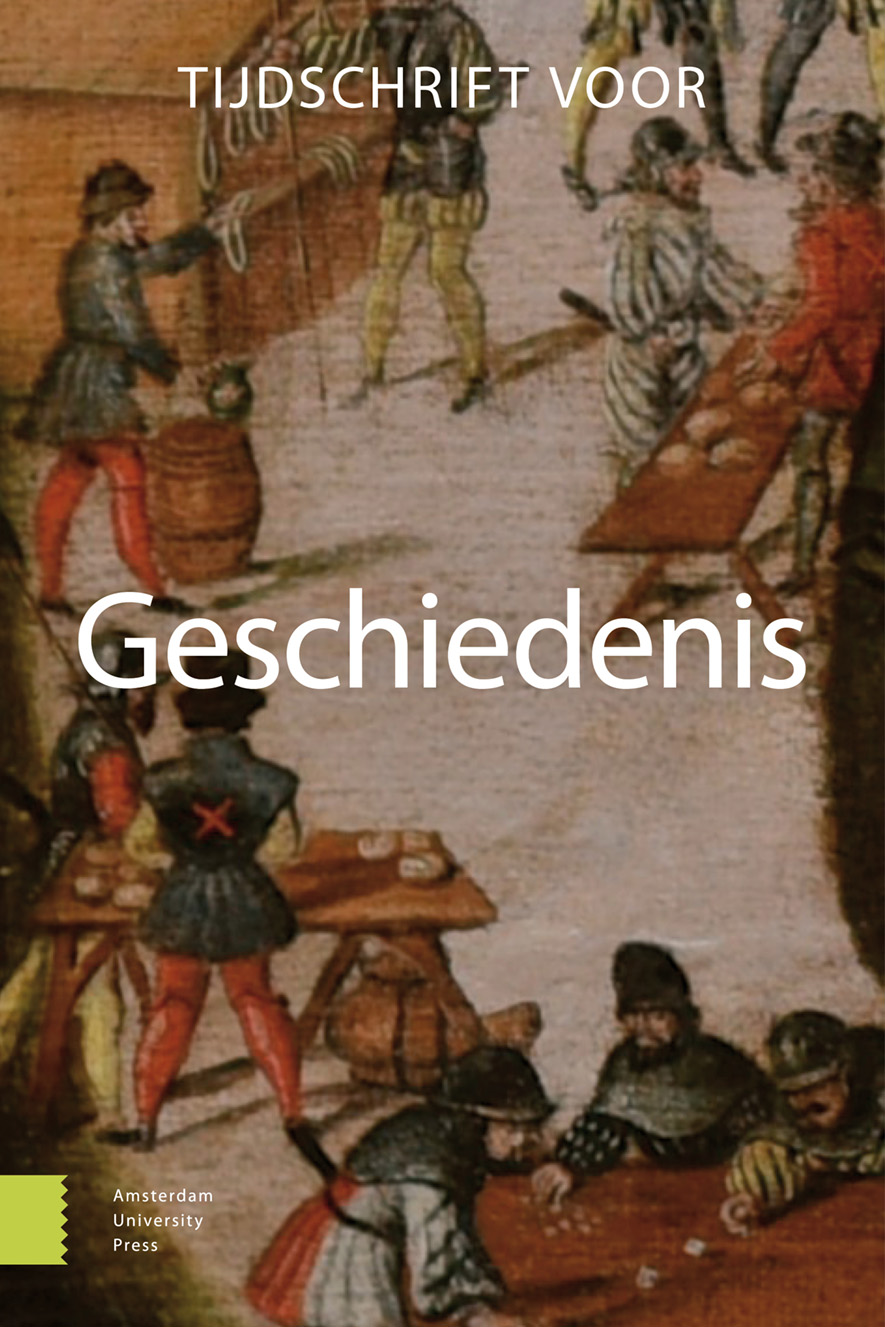
Volume 123, Nummer 2, 2010
-
-
Redactioneel - Het recht in eigen hand: bloedwraak, vete en partijstrijd in de late middeleeuwen
MeerRedactioneel - Het recht in eigen hand: bloedwraak, vete en partijstrijd in de late middeleeuwen Minder Redactioneel - Het recht in eigen hand: bloedwraak, vete en partijstrijd in de late middeleeuwen
-
-
-
Bloedwraak en vete in de late middeleeuwen
MeerBloedwraak en vete in de late middeleeuwen Minder Bloedwraak en vete in de late middeleeuwenAuteur: Peter HoppenbrouwersModern descriptions of the medieval culture of violence usually lump together two distinct forms of private retaliation: taking blood revenge after a homicide and declaring war (or ‘a feud’) on one’s enemies because of grave injustice done. Without any doubt, this is partly due to the vague or ambiguous terminology in many medieval sources. Even so, in a legal context blood vengeance and feuding were meticulously kept apart, and treated differently. By observing this legal distinction we can get a better view of the attempts made by late medieval states, in different periods and along diverse tracks, to extend their monopoly of violence at the cost of more or less institutionalised forms of private violence. Around 1500, this process of containment was not anywhere near completion, but thanks to the gradual criminalisation of vengeance killings, feuding and other types of private warfare, a process that was supported by fundamental changes of mentality vis à vis family solidarity and the uncontrolled use of physical force, the end of a world in which people frequently ‘took the law into their own hands’, had come in sight.
-
-
-
De strijd om de vete in het Heilige Roomse Rijk - Recent onderzoek en nieuwe interpretaties
MeerDe strijd om de vete in het Heilige Roomse Rijk - Recent onderzoek en nieuwe interpretaties Minder De strijd om de vete in het Heilige Roomse Rijk - Recent onderzoek en nieuwe interpretatiesAuteur: Hillay ZmoraFeuding has for a long time been a subject of considerable interest to historians and social scientists. Recent years have seen major developments in the field, especially in Germany. An indication of the importance of this area of study is not only the increasing number of publications and the variety of approaches, but also the fierce historiographical and ideological debate surrounding it. The present article reviews these developments. It analyses recent attempts to refute the nearly canonical interpretation of Otto Brunner, the ensuing debate, and the various explanations which have arisen. The survey ends with an examination of the latest direction in research on the feud, and with a sketch of a new explanatory framework by the author.
-
-
-
Belichaamde eer, wraak en vete - Een historisch- en cognitief-antropologische benadering
MeerBelichaamde eer, wraak en vete - Een historisch- en cognitief-antropologische benadering Minder Belichaamde eer, wraak en vete - Een historisch- en cognitief-antropologische benaderingAuteur: Han Nijdamhistorians to view violence, revenge (as a human emotion), and honour as human universals out of which a cultural phenomenon such as feud has arisen in the past and will arise again repeatedly in the future. Various cultures in the past have tried to avert feuding by means of compensation for the original violent act, often involving payment of a certain amount of goods or money. Such practices were codified in texts which describe what was required in order to compensate each different type of injury. The article ends by drawing attention to a reconsideration of the nature-nurture debate within anthropology and the cognitive sciences. Since anthropology has been a discipline which many historians have turned to for inspiration in the past, it may be profitable to be aware of this development.
-
-
-
Factiestrijd in laatmiddeleeuws Vlaanderen
MeerFactiestrijd in laatmiddeleeuws Vlaanderen Minder Factiestrijd in laatmiddeleeuws VlaanderenAuteurs: Jonas Braekevelt, Frederik Buylaert, Jan Dumolyn & Jelle HaemersDuring the Late Middle Ages, faction formation in Flemish cities was largely determined by both international and local political and socio-economic relationships or oppositions and conflicts concerning honour and interests between rivalling elite networks. The ‘factions’ of the Flemish patricians often had a concentric pattern, with a core – usually closely interconnected by means of family ties – and a sympathising periphery, supporting the core for economic, political, or ideological reasons. The reasons why corporative middle groups supported factions are sometimes hard to fathom. The sources show that patrician factions often feared the middle classes and manual workers. These were able to punish newly elected leaders severely if they did not live up to their – sometimes great – expectations. The stakes of such conflicts were high, which probably explains their intensity as well as the increasingly frequent interventions by the state. Although the growing political influence of the Burgundian dynasty in the urban faction struggle in Flanders must be recognized, it can be disputed whether growing state power ensured less ‘private violence’. On the contrary, it seems that the Dukes often consciously ‘participated’ in faction struggles in order to reinforce sovereign power in the city.
-
-
-
Tussen publiek en privaat - Partijstrijd in Gelre in de veertiende eeuw
MeerTussen publiek en privaat - Partijstrijd in Gelre in de veertiende eeuw Minder Tussen publiek en privaat - Partijstrijd in Gelre in de veertiende eeuwAuteur: Aart NoordzijDuring the late middle ages, public and private aspects of political life were interrelated; the boundaries between these two spheres were vague, and illdefined. However, notwithstanding this interrelatedness, contemporaries did make a distinction between the public and the private. For example, inhabitants of the duchy of Guelders considered their duchy as a political community with a public nature: Guelders was an independent unit, relatively autonomous from the rest of society. Aspects that were part of this public sphere were, among others, the office of the prince, the office of local functionaries, the ducal council, the mint, and revenues from tolls, levies, and taxes. The dynamic relations between private interests, functions, and values, and the nascent public domain form the background to the party strife raging in Guelders during the second half of the fourteenth century. Not only were the private interests of aristocrats and their families and supporters at stake in this party strife, but also the political community of Guelders itself. The growth of a public sphere on the one hand, and the interrelatedness of the public and the private on the other, fuelled party strife: private conflicts could become public, and, conversely, public problems could easily become private ones.
-
-
-
Politiek en geweld in een laatmiddeleeuwse stad - Utrecht, 1400-1430
MeerPolitiek en geweld in een laatmiddeleeuwse stad - Utrecht, 1400-1430 Minder Politiek en geweld in een laatmiddeleeuwse stad - Utrecht, 1400-1430Auteur: Justine SmithuisThis contribution examines the function and use of violence by factions in the late-medieval city of Utrecht. In contrast to the existing perception that the power base of these groups consisted mainly of armed followers within the city, recruited on the basis of kinship, social networking, and patronage, this investigation into the violent outbreaks that occurred between 1400 and 1430 shows a slightly different picture. Firstly, faction leaders, whether operating from within the city or from outside (as exiles), were capable of organizing a fairly high level of private violence in order to remove the reigning faction from power. Secondly, those who participated in violent coups not only consisted of Utrecht residents, but also, and frequently, of non-residents. Although it is difficult to determine the exact numbers and nature of these followings, it can be established that participants were recruited on the basis of existing bonds with the faction leaders (with a role perhaps also for tenants on country estates), personal or collective grievances (e.g. within the guilds), or, not surprisingly, for financial reward. The readiness to use violence for political ends fits the violent feuding culture shared by different levels of society in large parts of Europe, but mainly within the aristocracy. It is argued that a comparison with feuding groups, factions, and armed retinues elsewhere might allow a better understanding of the composition and functioning of the late-medieval factions in Utrecht and the Low Countries as a whole.
-
-
-
Schieringers, Vetkopers en het einde van de Friese vrijheid - De historiografie van veten en partijen in een overgangssituatie
MeerSchieringers, Vetkopers en het einde van de Friese vrijheid - De historiografie van veten en partijen in een overgangssituatie Minder Schieringers, Vetkopers en het einde van de Friese vrijheid - De historiografie van veten en partijen in een overgangssituatieAuteur: Matthijs GerritsParty strife between the Schieringers and Vetkopers in late-medieval Frisia west of the river Lauwers is poorly understood. This article initially follows the historiography on party strife in Frisia and then turns to modern discussions on feuding and power distribution in the same territory. It is suggested that we should look at the Frisian party strife between Schieringers and Vetkopers as a more public, more violent, and less local phenomenon than feuding. We should therefore dismiss some episodes that have in the past been described as party strife. In addition, early results from network-like studies show that the parties involved in party strife may have had a more constant character and may have been instrumental in the absence of party strife as well. What role ideology played in Frisian party strife remains an intriguing question.
-
-
-
Meer kopen en harder werken - Jan de Vries, The industrious revolution. Consumer, behavior and the household economy, 1650 to the present (Cambridge University Press; New York 2008) 327 p., €26,- ISBN 9780521719254
MeerMeer kopen en harder werken - Jan de Vries, The industrious revolution. Consumer, behavior and the household economy, 1650 to the present (Cambridge University Press; New York 2008) 327 p., €26,- ISBN 9780521719254 Minder Meer kopen en harder werken - Jan de Vries, The industrious revolution. Consumer, behavior and the household economy, 1650 to the present (Cambridge University Press; New York 2008) 327 p., €26,- ISBN 9780521719254Auteur: Thijs Lambrecht
-
-
-
Het vooruitgangsdenken in historisch perspectief - Bedrich Loewenstein, Der Fortschrittsglaube. Geschichte einer europäischen Idee (Vandenhoeck & Ruprecht; Göttingen 2009) 463 p., €57,90 ISBN 978389971521
MeerHet vooruitgangsdenken in historisch perspectief - Bedrich Loewenstein, Der Fortschrittsglaube. Geschichte einer europäischen Idee (Vandenhoeck & Ruprecht; Göttingen 2009) 463 p., €57,90 ISBN 978389971521 Minder Het vooruitgangsdenken in historisch perspectief - Bedrich Loewenstein, Der Fortschrittsglaube. Geschichte einer europäischen Idee (Vandenhoeck & Ruprecht; Göttingen 2009) 463 p., €57,90 ISBN 978389971521Auteur: M.C. Brands
-
-
-
Maria als priester en gastvrouw - Cleo McNelly Kearns, The Virgin Mary, Monotheism, and Sacrifice (Cambridge University Press; New York 2008) 356 p., €67,50 ISBN 9780521871563
MeerMaria als priester en gastvrouw - Cleo McNelly Kearns, The Virgin Mary, Monotheism, and Sacrifice (Cambridge University Press; New York 2008) 356 p., €67,50 ISBN 9780521871563 Minder Maria als priester en gastvrouw - Cleo McNelly Kearns, The Virgin Mary, Monotheism, and Sacrifice (Cambridge University Press; New York 2008) 356 p., €67,50 ISBN 9780521871563Auteur: R.P.H. Pauls
-
-
-
‘Ik ben Grieks geboren’: de klassieke oudheid rondom de Rijndelta - René Veenman, De klassieke traditie in de Lage Landen (Uitgeverij Vantilt; Nijmegen 2009) 400 p., ill., €24,95 ISBN 978946040375
Meer‘Ik ben Grieks geboren’: de klassieke oudheid rondom de Rijndelta - René Veenman, De klassieke traditie in de Lage Landen (Uitgeverij Vantilt; Nijmegen 2009) 400 p., ill., €24,95 ISBN 978946040375 Minder ‘Ik ben Grieks geboren’: de klassieke oudheid rondom de Rijndelta - René Veenman, De klassieke traditie in de Lage Landen (Uitgeverij Vantilt; Nijmegen 2009) 400 p., ill., €24,95 ISBN 978946040375Auteur: Ruurd Halbertsma
-
-
-
Een welverdiende bonus - Koenraad Verboven, Katelijn Vandorpe en Veronique Chankowski eds., Pistoi dia tèn technèn. Bankers, Loans and Archives in the Ancient World. Studies in honour of Raymond Bogaert (Peeters; Leuven 2008) 482 p., €84,- ISBN 9789042919969
MeerEen welverdiende bonus - Koenraad Verboven, Katelijn Vandorpe en Veronique Chankowski eds., Pistoi dia tèn technèn. Bankers, Loans and Archives in the Ancient World. Studies in honour of Raymond Bogaert (Peeters; Leuven 2008) 482 p., €84,- ISBN 9789042919969 Minder Een welverdiende bonus - Koenraad Verboven, Katelijn Vandorpe en Veronique Chankowski eds., Pistoi dia tèn technèn. Bankers, Loans and Archives in the Ancient World. Studies in honour of Raymond Bogaert (Peeters; Leuven 2008) 482 p., €84,- ISBN 9789042919969Auteur: Paul Erdkamp
-
-
-
De Grieken en hun mythen - Robin Lane Fox, Travelling Heroes. Greeks and their myths in the epic age of Homer (Allen Lane; Londen 2008) 528 p., ill., krt., €32,- ISBN 9780713999808
MeerDe Grieken en hun mythen - Robin Lane Fox, Travelling Heroes. Greeks and their myths in the epic age of Homer (Allen Lane; Londen 2008) 528 p., ill., krt., €32,- ISBN 9780713999808 Minder De Grieken en hun mythen - Robin Lane Fox, Travelling Heroes. Greeks and their myths in the epic age of Homer (Allen Lane; Londen 2008) 528 p., ill., krt., €32,- ISBN 9780713999808Auteur: Henk Singor
-
-
-
Geschiedenis, herinnering en identiteit in het klassieke Messenië - Nino Luraghi, The Ancient Messenians. Constructions of Ethnicity and Memory (Cambridge University Press; Cambridge 2008) 389 p., ill., krt., €81,- ISBN 9780521855877
MeerGeschiedenis, herinnering en identiteit in het klassieke Messenië - Nino Luraghi, The Ancient Messenians. Constructions of Ethnicity and Memory (Cambridge University Press; Cambridge 2008) 389 p., ill., krt., €81,- ISBN 9780521855877 Minder Geschiedenis, herinnering en identiteit in het klassieke Messenië - Nino Luraghi, The Ancient Messenians. Constructions of Ethnicity and Memory (Cambridge University Press; Cambridge 2008) 389 p., ill., krt., €81,- ISBN 9780521855877Auteur: Henk Singor
-
-
-
Preken in de middeleeuwen - Thom Mertens, Patricia Stoop en Christoph Burger eds., De Middelnederlandse preek (Verloren; Hilversum 2009) 320 p., ill., €19,- ISBN 9789087040581
MeerPreken in de middeleeuwen - Thom Mertens, Patricia Stoop en Christoph Burger eds., De Middelnederlandse preek (Verloren; Hilversum 2009) 320 p., ill., €19,- ISBN 9789087040581 Minder Preken in de middeleeuwen - Thom Mertens, Patricia Stoop en Christoph Burger eds., De Middelnederlandse preek (Verloren; Hilversum 2009) 320 p., ill., €19,- ISBN 9789087040581Auteur: Johan Oosterman
-
-
-
Staat en economie in de Nederlandse Republiek - Oscar Gelderblom ed., The political economy of the Dutch Republic (Ashgate; Farnham 2009) 329 p., tab., €73,- ISBN 9780754661597
MeerStaat en economie in de Nederlandse Republiek - Oscar Gelderblom ed., The political economy of the Dutch Republic (Ashgate; Farnham 2009) 329 p., tab., €73,- ISBN 9780754661597 Minder Staat en economie in de Nederlandse Republiek - Oscar Gelderblom ed., The political economy of the Dutch Republic (Ashgate; Farnham 2009) 329 p., tab., €73,- ISBN 9780754661597Auteur: Griet Vermeesch
-
-
-
Poldergeschiedenis - Han van Zwet, Lofwaerdighe dijckagies en miserabele polders. Een financiële analyse van landaanwinningsprojecten in Hollands Noorderkwartier 1597-1643 (Verloren; Hilversum 2009) 552 p., ill., krt., €45,- ISBN 9789087041069
MeerPoldergeschiedenis - Han van Zwet, Lofwaerdighe dijckagies en miserabele polders. Een financiële analyse van landaanwinningsprojecten in Hollands Noorderkwartier 1597-1643 (Verloren; Hilversum 2009) 552 p., ill., krt., €45,- ISBN 9789087041069 Minder Poldergeschiedenis - Han van Zwet, Lofwaerdighe dijckagies en miserabele polders. Een financiële analyse van landaanwinningsprojecten in Hollands Noorderkwartier 1597-1643 (Verloren; Hilversum 2009) 552 p., ill., krt., €45,- ISBN 9789087041069Auteur: Piet van Cruyningen
-
-
-
‘Motions of the heart’ - William W.E. Slights, The Heart in the Age of Shakespeare (Cambridge University Press; New York 2008) 205 p., ill., £99,- ISBN 9780521889438
Meer‘Motions of the heart’ - William W.E. Slights, The Heart in the Age of Shakespeare (Cambridge University Press; New York 2008) 205 p., ill., £99,- ISBN 9780521889438 Minder ‘Motions of the heart’ - William W.E. Slights, The Heart in the Age of Shakespeare (Cambridge University Press; New York 2008) 205 p., ill., £99,- ISBN 9780521889438Auteur: R.W. Maslen
-
-
-
Kunstpatronage in Antwerpen - Bert Timmermans, Patronen van patronage in het zeventiende-eeuwse Antwerpen. Een elite als actor binnen een kunstwereld (Aksant; Amsterdam 2008) 427 p., ill., krt., tab., €35,- ISBN 9789052602479
MeerKunstpatronage in Antwerpen - Bert Timmermans, Patronen van patronage in het zeventiende-eeuwse Antwerpen. Een elite als actor binnen een kunstwereld (Aksant; Amsterdam 2008) 427 p., ill., krt., tab., €35,- ISBN 9789052602479 Minder Kunstpatronage in Antwerpen - Bert Timmermans, Patronen van patronage in het zeventiende-eeuwse Antwerpen. Een elite als actor binnen een kunstwereld (Aksant; Amsterdam 2008) 427 p., ill., krt., tab., €35,- ISBN 9789052602479Auteur: Veerle De Laet
-
Volumes & nummers
-
Volume 139 (2026)
-
Volume 138 (2025)
-
Volume 137 (2024)
-
Volume 136 (2023)
-
Volume 135 (2022)
-
Volume 134 (2021)
-
Volume 133 (2020)
-
Volume 132 (2019)
-
Volume 131 (2018)
-
Volume 130 (2017)
-
Volume 129 (2016)
-
Volume 128 (2015)
-
Volume 127 (2014)
-
Volume 126 (2013)
-
Volume 125 (2012)
-
Volume 124 (2011)
-
Volume 123 (2010)
-
Volume 122 (2009)
Meest gelezen

Meest geciteerd Most Cited RSS feed
-
-
De lange jaren zeventig
Auteur: Duco Hellema
-
- More Less